
People > Sightseeing
Or, how I managed to miss major sights while traveling this summer

I just returned from over two months of traveling, through Japan and soon after, the UK and Ireland. And I managed to miss so many sites and attractions. I didn’t visit any shrines or temples in Tokyo or Kyoto (this time), I didn’t see Stonehenge or Westminster Abbey or the Globe Theater. How could I have traveled so far and “seen” so little?
For both trips, I had official business to attend to. In Japan, I was leading a “Dialogue” for students and teaching an intensive writing class for a month. It’s my third time leading “From Farm to Page: Food Culture & Food Writing in Japan.” It’s truly a rewarding experience, and I love it for so many reasons. I love introducing people to Japan through the lens of food, and I love introducing students to creative writing through the lens of food. So many students entered the program with an ambivalent-at-best relationship to writing. They hadn’t done it in a long time, and whatever writing they were doing felt stressful or tedious. I wanted them to grow to love it, and I feel like it actually happened, which is different from teaching MFA or creative writing students, who come in loving to write. (if you want to see detailed accounts of each and every day, please check out their amazing blog here)
It’s a jam-packed schedule, filled with classes, field excursions and guest speakers. We visit the Kikkoman Soy Sauce museum, a rice laboratory, a mushroom farm, miso factory, tofu factory, and more. We learn how to prepare our own sashimi from a freshly caught fish, and visit an elementary school where students as young as six serve lunches to each other and clean up afterward. We’re constantly on the go. But we do have one free day per week, and in the past I’ve used that day to check off things on my Japan-travel-wish-list. But this time, I used my free days differently.
In Tokyo, I had the opportunity to meet up with a couple of Japanese adoptees, two of whom have a YouTube channel where they discuss matters of concern to adopted people there. (btw if you are interested, you can auto-translate the subtitles if you don’t understand Japanese!) I was very interested in meeting with them ever since I met with journalist Eri Goto last summer, who writes a lot about issues around adoption, single mothers and related topics. Eri set up a dinner meeting with us and we had a lively discussion. Unlike many transnational, transracial Asian adoptees in the US, there is very little organizing and conversation amongst Japanese adoptees. Most of them are domestically adopted by Japanese families and not sent abroad, so their issues are very different. In fact, one of the most pressing questions for them is the right to know that they are adopted in the first place. They were very interested when I told them about LDA, or Late Discovery Adoptees, in the US.
I learned that adoptees DO have access to their family registry, or koseki, but many would not even think to pursue that if they don’t know they are adopted in the first place. Many discover the truth when applying for a passport, or by accident. So unlike many domestically adopted folks in the United States, they can access their full records, with information about both their adoptive and birth families - but they don’t know to even look.
I told them about closed records in the US, how many states continue to seal off vital records for adopted adults, and they were shocked. (Indeed, many friends of mine were in the act of lobbying California - that STILL has sealed records! - while I was in Japan. And California Senate Bill 381 passed the Senate floor unanimously (35-0) and is currently moving through the State Assembly. Authored by Senator Aisha Wahab, this bill grants adult adoptees (18 and older) unrestricted access to their original birth certificates and evidence of adoption. [1, 2] Shout out to my activist friends who have shown up in Sacramento for years trying to get this to go through.
There was so much to talk about. The two-hours we were allowed by our reserved restaurant passed in a flash, so we continued our conversation in my hotel’s lounge. I found this meeting so very moving because I felt like I was somehow witnessing the beginning of Japan’s adoptee movement, with just a handful of people. And as for them, they were fascinated to hear about domestic and transnational adoptees I’ve known, and to realize that they were really part of a worldwide network.
Adoptees around the world have so much in common and also have very unique circumstances based on their own countries and situations. I found myself nodding my head in understanding over so much of our conversations (and vice versa) and then other aspects were completely illuminating for me.


Eri, the journalist, has written a story about this meetup between the adoptees and myself, and I’m eager to see it when it comes out in AERA magazine. Apparently she thought it newsworthy to write about this international adoptee meetup!
For my next free day in Tokyo, I had the opportunity to do an author talk with a group of bilingual reader/writers, organized by Anju Mori and Cheryl Sakurai of Global Bookish Hub. I first learned of Anju when I noticed her posting on Threads, when she’d excitedly write about visiting various Bay Area bookstores. They truly brought her joy and it made me happy to recommend a few to her. Then I noticed that she was moving back to Japan, and was organizing some events for bookworms and those interested in writing and reading. I wrote to her and told her I’d be coming to Japan and that I’d be glad to visit her group(s) as an author and workshop facilitator, if she was interested. And she was! They set up two events for me - one in Tokyo and one in Kyoto, where we participated in great conversations about writing, my memoir, etc. and then I led an informal workshop on journaling. Both of these events were so fun and I got to meet so many kindred spirits in both cities!


In Kyoto, I got to meet with another adopted person, which turned out to be incredibly moving. He brought a big envelope with all of his official “papers,” which I immediately recognized as something that adoptees do worldwide. We bring whatever sparse (or significant) bits of evidence we have that tells the truth of our origins. He also brought a manuscript of his own memoir which he’s been working on. We talked for hours and hours and I learned so much about his story.
One thing that I learned was that adoption is very stigmatized in Japan, and many adopted people, if they know their status, are still reluctant to share it with others. I’m not sure what this is about, but I imagine it is related to what adoptees worldwide feel - that we are not enough, that we are “bastards” who are sullying the family line. In any case, he is not willing to share his identity, although he was very eager to share his story with me. He told his own story of being a “late-discovery” adoptee, and the lengths his family went to to not reveal his adoption. He shared with me some personal artifacts that he unearthed during his search. Both of us were in tears. (photo is of me with Sora, who served as an amazing translator for this conversation)
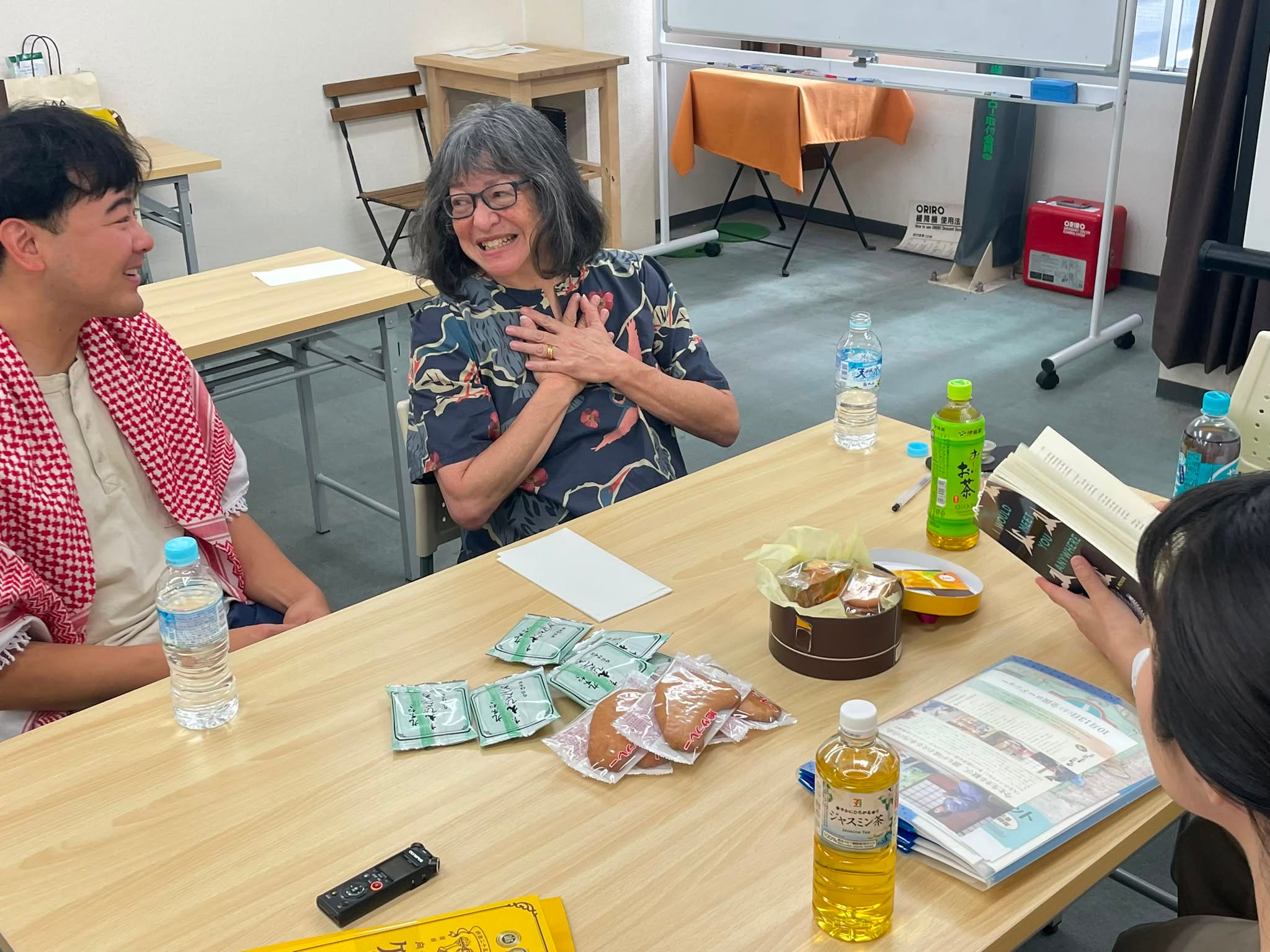
So those were my free days in Japan. I didn’t see any temples or shrines. I didn’t get any/much shopping done, and I didn’t sit in cafes and write postcards as I’ve done in the past. But these human connections were so deep, and so precious, that I didn’t mind.
After a brief break at home, I then traveled to the UK for the ASAC (Alliance for the Study of Adoption & Culture) conference at Leeds University. There, I got to meet with amazing adoptees from around the world to hear about their scholarship in critical adoption studies. What a bunch of smart folks! I was amazed and impressed with every session.
Another thing that made this conference so incredibly special was that I got to experience it with my goddaughter Vaishali, who is herself a transracial, intercountry adoptee. She’s currently a graduate student in the UK, and it happened to be convenient for her to travel to Leeds to spend the week with me. We haven’t had one-on-one time together since she was ten and we spent a day at Disneyland, so this was a huge thing for us! To be able to be with her at this conference was incredibly meaningful and it sparked a lot of deep talk and connection.
We hung out with several adoptees from the panel I presented, on adoptee writers in community. I talked about the Adoptee Literary Festival, which I helped organize last year. It was a joy to spend time with Alice Stephens, an adoptee writer whom I love and admire, and get to hang out with AGAIN at the BIPOC Adoptee conference in Portland in a few weeks!


After the conference, Vaishali and I took the train up to Wales, where she lives, and I got to fulfill a lifelong bucket-list dream - I got to sleep in the Gladstone’s Library, one of the world’s only residential libraries! The place is breathtakingly gorgeous, but with modest sleeping rooms. I was in HEAVEN. Years ago, my spouse and I fantasized about doing a worldwide tour of bookstores and libraries. We searched for “best libraries in the world” and the Gladstone came up in the top 5. We’ve been on their mailing list for over ten years, and I finally got to go. It did not disappoint. I even got some writing done in the dreamy “reading room.” 10/10


Next, I returned to London to meet up with some other adoptee friends whom I’d previously only met online (RIP Twitter). When my book came out in 2023, they organized an online author talk, and Vik hosts a weekly adoptee chat on Zoom. They were there on the eve of their OWN watershed activist moment, when the British prime minister issued a formal apology (!!!) for years of forced adoptions and child separation. I can’t imagine that ever happening in the US. It was an emotional and moving time, and I was gobsmacked to see my own friends on BBC the next day, being apologized to by the Prime Minister!
Whenever I travel, I always prioritize people over sights! Hanging out in person is the best
What amazing adventures you have during your travels!